 Amsterdam

The dynamic lightinstallation in the ceiling of the Dutch National Opera & Ballet is one of the first computer-controlled lighting works in architecture. Peter Struycken created it in 1986 on commission of Cees Dam, the architect of the building, under the 1% scheme, which dictated that 1% of the expenses made for creating public buildings would be dedicated to art. The lights are programmed to light up in different intervals, creating waves that glide over the ceiling while visitors enter the room. The artwork was a hit with the public, but it was only used for a couple of years until the then Artistic Director of the opera, Pierre Audi, decided to stop using it.
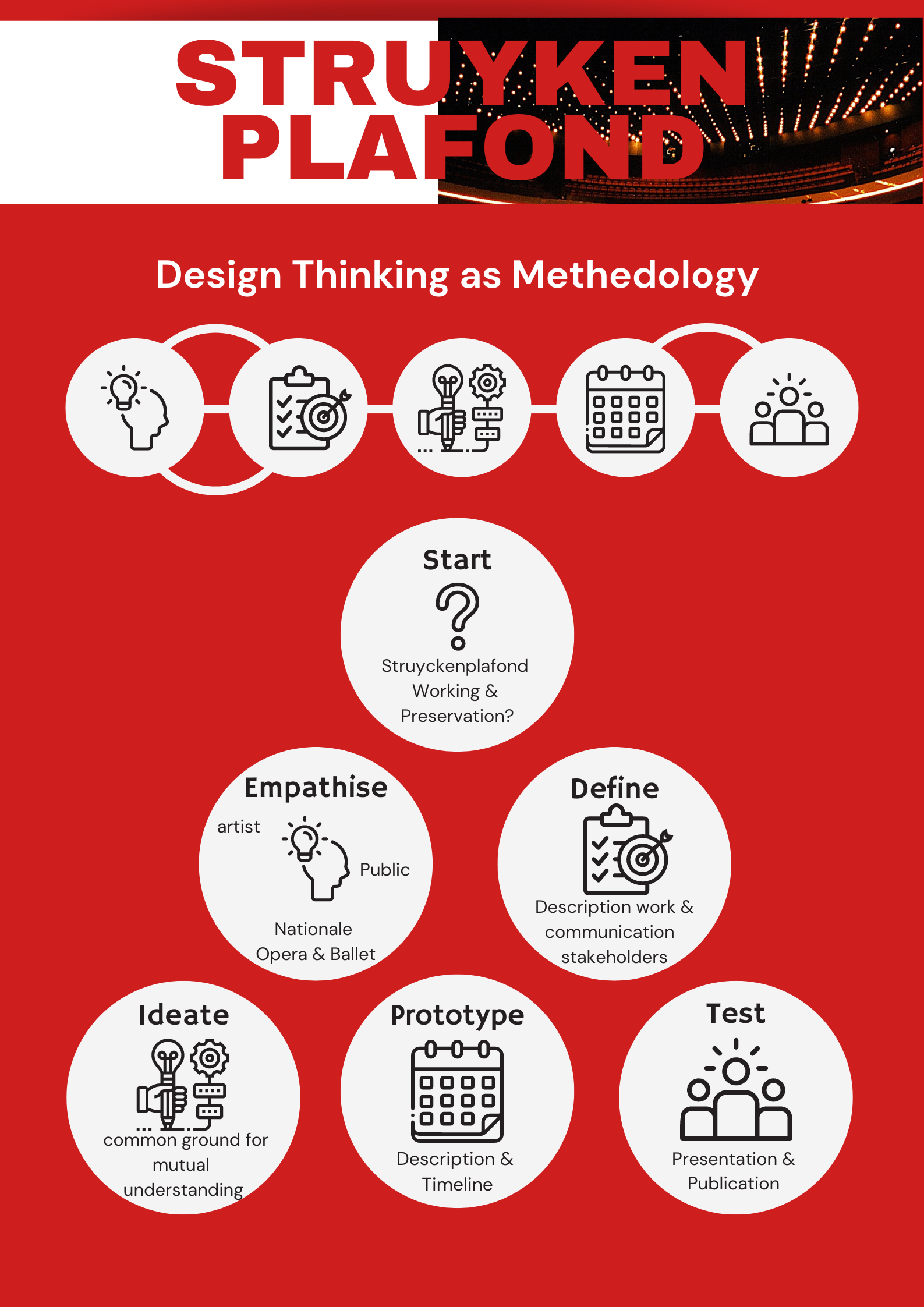
When we started this project in the course Placemaking for Conservation we did so under the question of how we could ensure the continued working and preservation of this artwork for the future. After consulting with the National Opera we discovered that the work has been in daily use since 2020 and there are multiple plans for the preservation. This made us realise that the main problems surrounding this case are that there is a lack of information on the convoluted history of the artwork, there is little communication between the artist and the National Opera & Ballet regarding the artwork, and there are multiple conflicting descriptions of the work. We set out to create a clear description of the work and lay out an extensive history, which both the artist and opera agree on.



.png)